In the late 19th century, the Alps invented houille blanche — white coal. The water of the torrents became electricity. Electricity became industry: aluminium, ferro-alloys, carbides, silicon.
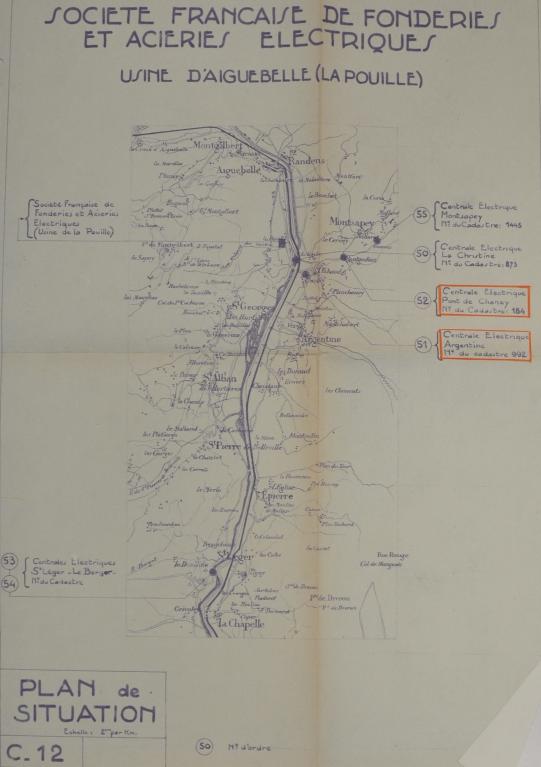
The valleys filled with factories. Maurienne, Tarentaise, Romanche, Oisans: wherever a torrent falls, an electric furnace follows. In Maurienne, some fifteen plants lined the Arc river over nearly a hundred kilometres. Four thousand workers.
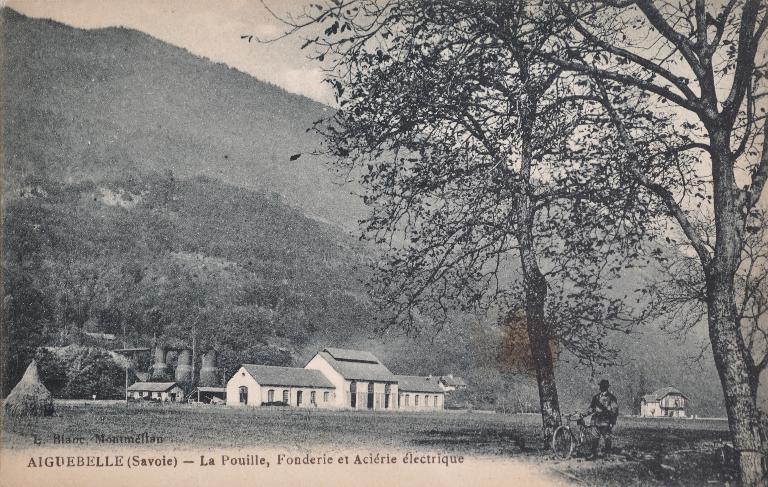
At La Pouille, a hamlet of Aiguebelle, it was Schneider of Le Creusot who opened the site in 1877. Iron ore was first brought down from the Hurtières mountains by inclined planes. When iron declined, arc furnaces took over — ferro-alloys, calcium carbide, then silicon carbide.
To power the furnaces, the La Christine plant was built on the Arc in 1930.
A few hundred metres away, an entirely different scale: the EDF Randens plant diverts the waters of the Isère under the mountain through a sixteen-kilometre gallery to discharge them into the Arc.
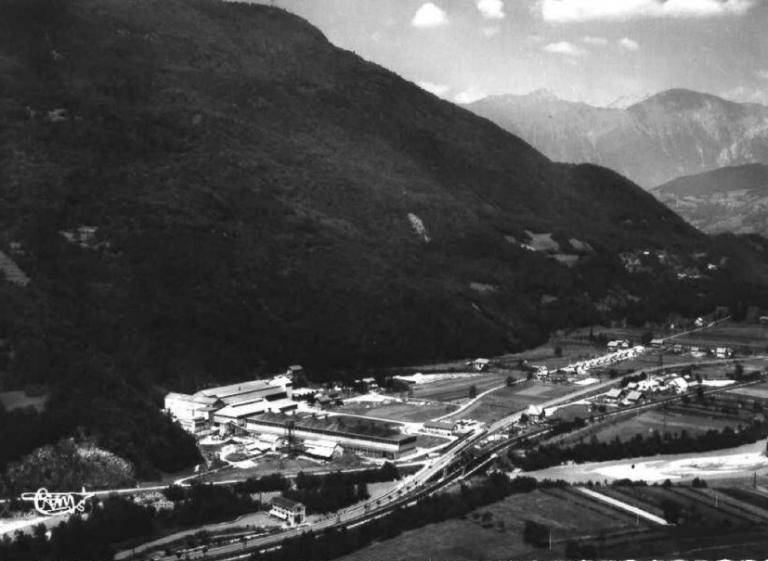
Then heavy industry left. China, Russia, the Middle East. The factories closed one by one. The La Pouille factory, by then part of Pechiney, was dismantled. The valley of forges became the valley of brownfields.
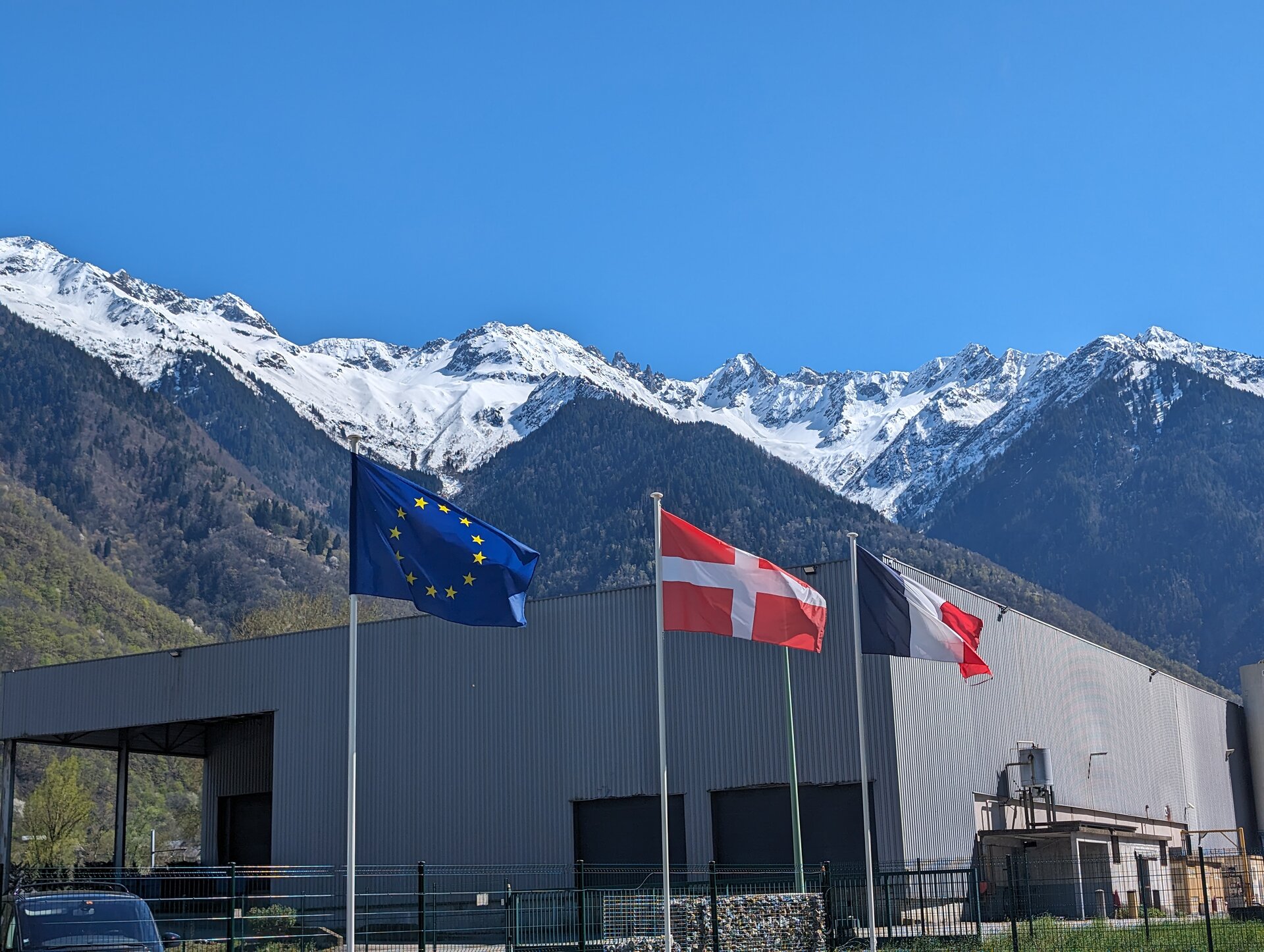
In 2026, silicon returns to La Pouille. Not as abrasive powder. As chips in servers.
CPUs refine ultra-local weather forecasts for several hundred thousand users — paragliders, mountaineers, rescue services, public agencies.
GPUs make the law accessible to all by processing millions of court decisions and legal texts.
Yesterday, raw ore was refined into useful material.
Today, raw data is refined into useful knowledge, distributed for the benefit of all.
No cooling towers, no water consumed.
The mountain cools the servers as it once cooled the Pechiney halls.
The electricity is hydraulic, decarbonised, local. Data does not transit through any foreign cloud.
The UPS units and electrical panels bear the name Schneider Electric — the same original company that opened the site in 1877. Nearly one hundred and fifty years later, the name returns to La Pouille. It no longer powers furnaces. It powers servers.
From the Opinel knife to the Ariane rockets, the Maurienne valley has given birth to or witnessed the innovations that made the greatness of France.
The ONERA transonic wind tunnel at Modane — the largest in the world — tested Concorde, the Airbus fleet, the Rafale fighter jet, the TGV and the Ariane rockets. At 1,700 metres beneath the mountain, the Modane Underground Laboratory hunts for neutrinos and dark matter. At Saint-Jean-de-Maurienne, Trimet still smelts aluminium.
Together with the neighbouring valleys — Grésivaudan, Romanche, Tarentaise, Arve — the Northern Alps are a cradle of technological sovereignty. It was there that Aristide Bergès launched houille blanche in the 1880s.
Today, in the same Grésivaudan, Soitec manufactures the silicon substrates that equip AI datacentres, STMicroelectronics etches the chips and Schneider Electric designs the electrical systems that power datacentres worldwide.
What these valleys did for the industry of past centuries, they are already doing for the 21st. Today, La Pouille is a demonstrator. An internal datacentre that proves what the valleys can offer. The land and the buildings exist — here or elsewhere in the Alps — for anyone who would do the same. Same energy, same cold. New industry.